November 20, 2009 - 5:01am
| WFED's Jason Miller | |
| GSA is applying green requirements to all new major leased buildings starting in January. | |
Download mp3
|
|
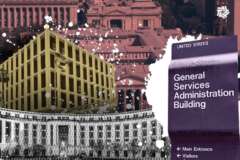
The General Services Administration's headquarters building at 18th and F Sts. in northwest Washington is a historic building, constructed in 1918, and it looks every bit of its 90-plus years.
That is why GSA is one of a handful of buildings that will go through a major refurbishment using Recovery Act funding to become a model of energy efficiency for the public and private sector, says Kevin Kampschroer, GSA's Acting Director of the Office of Federal High-Performance Green Buildings.
"There are different takes on what might be done in the building," he says. "We will take it from a pretty poor performer to something that is a showcase."
Kampschroer says that means installing solar power on the roof, getting the building's hot water through a solar thermal heating system and restoring the windows so they open.
"We will interact that opening of the windows with the system so if you open the window it will automatically turn off the local air conditioning," he says. "We still are debating what the system will be at the moment."
Kampschroer says the Homeland Security Department's complex at St. Elizabeths in Washington also will among the showcase buildings starting with the Coast Guard's new headquarters.
"Part of the Recovery Act is dealing with the next phases of the Department of Commerce's headquarters, the Department of Interior's headquarters and the Lafayette building where the Veterans Affairs Department and Export-Import Bank are located will be part of that set of projects," he says. "Clearly the Washington area because of the density of the federal presence has a lot of money going out there and we are pushing it out there."
Kampschroer spoke Thursday at the AFCEA Bethesda Energy and IT Day in Bethesda, Md.
Along with these major projects, there are a variety of smaller projects, including the Housing and Urban Development which GSA is improving through the use of energy savings performance contract and implementing some renewable resources.
GSA received $5.5 billion from the Recovery Act to revamp federal buildings. Kampschroer says the agency has spent about $1.4 billion and will be up to $2 billion by the end of December. GSA hopes to award another $1 billion by March and the final billion dollars by the end of 2010.
"In every case we are challenging the design teams to not just meet the minimum performance requirements we set, but exceed them," he says. "We have about 200 projects that are small in scope where we are focusing on lighting systems or mechanical systems of the building or just doing basic controls tune ups and improving the operations. They are all across the country."
He adds that GSA is getting a lot more interest from vendors who have not done business with the government before, and the goal is to make it easier for them to win contracts.
The move to green buildings is not new for GSA. Kampschroer says the agency runs about 45 buildings that have met some energy efficiency requirements.
GSA is taking its experience from those initial buildings and applying the lessons learned to their latest efforts.
"We discovered that as we pushed the design teams and you got the higher ratings, if you compare say a LEED certified versus LEED gold, we see much lower energy costs, by 30 percent, much lower operating costs," he says. "What are we doing to improve? We looked at where people concentrated their energy, what aspects of sustainability, and we realized the design teams understood that. LEED silver is not enough."
Kampschroer says it also has to include water conservation, indoor air and environmental quality as well.
"High performing green building is not just about energy, it's not just about water, it's about the effects on human performance," he says. "If we don't deal with that health issues with the off gassing of materials, then we've missed the boat. We've given more guidance to the design team so we achieve all of the goals and not just some of them."
The green goals are not just for projects under the Recovery Act, but starting Jan. 1 any new lease of more than 10,000 square feet must meet certain minimum energy efficient requirements.
Kampschroer says for older buildings that are leased it doesn't take much to increase energy efficiency.
"If you tighten up building operations you can cut 15 percent of energy cost," he says. "And given the way we write leases, if you save on energy costs it goes directly to your bottom line."
For the buildings the government owns, each building must go through a recommissioning project.
"We are finding that we can cut 15-20 percent of the energy out of our energy budget by recommissioning the building and making them operate the way they should," Kampschroer says.
(Copyright 2009 by FederalNewsRadio.com. All Rights Reserved.)
Home | About Us | Privacy Statement | Terms of Use | Copyright Infringement | EEO Public File Report | Bonneville International
AP material Copyright 2009 Associated Press. All rights reserved. This material may not be published, broadcast, rewritten, or redistributed.